
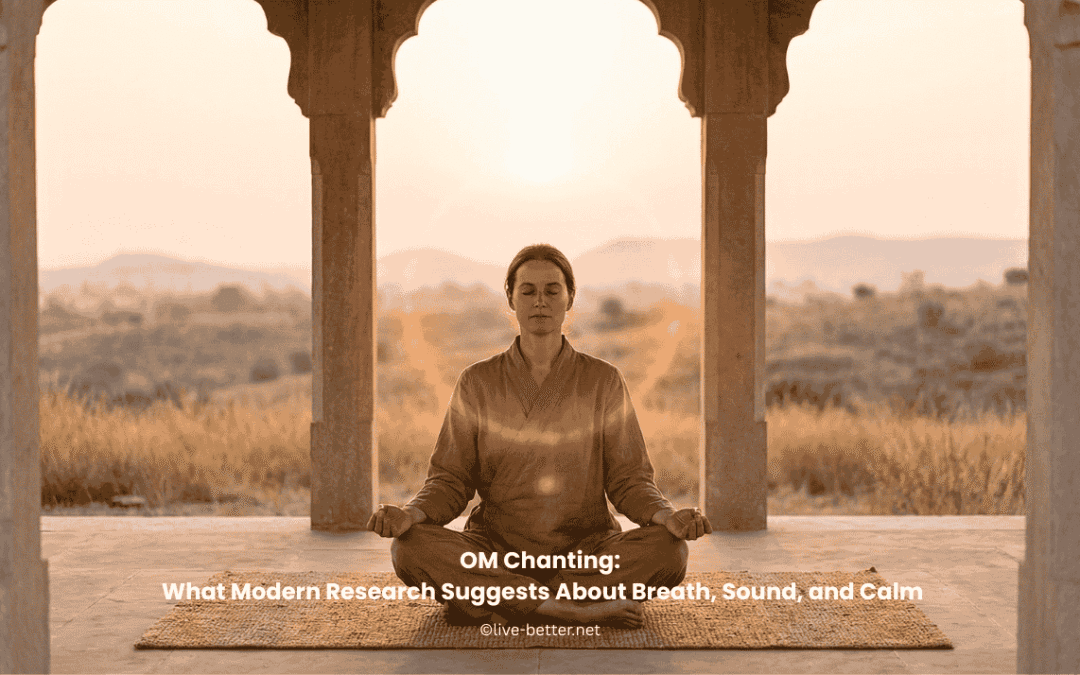
OM Chanting Research:
For well over three thousand years, OM (AUM) has been used in Indian spiritual practices as a means of attaining stillness, contemplation and inner alignment. Although OM’s roots are in lived experience and not theory, recent advances in neuroscience and physiology have allowed for some exploration of what occurs in the brain and body when engaging in slow OM chanting practices.
Below you will find an objective review of what current research indicates about OM — without exaggeration, without diminishing traditional perspectives, and without reducing experience to explanation.
OM Chanting As A Practice, Not A Claim
Classically speaking, OM was never a statement to be proven.
It was — and continues to be — a practice to be experienced.
The process of chanting is natural:
A — Resonating in the chest
U — Vibrating through the throat
M — Nasal and cranial humming
Silence — The most crucial part
Current research does not attempt to define the meaning of OM. Rather, research seeks to identify physiological and neurological patterns that occur while engaged in slow, resonant chanting.
EEG Studies on OM Chanting: Brain Wave Patterns and Calm Awareness
EEG — Electroencephalography — is used to record the electrical activity occurring throughout the brain in real-time. It is one of the most common tools used in meditation research.
Studies that have examined the effects of OM chanting and other forms of vocal meditation have found:
Alpha and Theta Wave Activity During OM Chanting
An increase in alpha wave activity (8–12 Hz) — indicative of relaxed alertness
An increase in theta wave activity (4–7 Hz) — indicative of inward focus and a meditative state
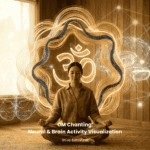
Increased hemispheric coherence
Decreased neural activity associated with stress and ruminative thoughts
These findings are similar to those found in well-established forms of meditation, indicating that chanting OM can promote calm and focused awareness.
While EEG does not assess spirituality, it provides insight into how different areas of the brain interact during various activities.
fMRI Research on OM Chanting and Emotional Regulation
Functional MRI (fMRI) assesses changes in blood oxygenation, which are indicative of neural activity.
When comparing fMRI scans of individuals who were engaged in OM chanting with those who listened to neutral sounds or rested quietly, researchers have seen:
Reduced amygdala activity (associated with fear and emotional reactivity)
Reduced activity in the limbic system (emotions, motivation)
Modulation of the Default Mode Network (DMN), which is associated with mind-wandering
Increased prefrontal regulation
These findings indicate that OM chanting promotes a shift toward a parasympathetic state, which is characterized by attentiveness rather than suppressed thinking.
Nitric Oxide and Humming: Physiological Effects During OM Chanting
One of the most reliable physiological findings associated with OM chanting relates to nitric oxide production.
What Is Nitric Oxide?
Nitric oxide is a molecule that serves as a signaling molecule and is responsible for:
Regulating cerebral blood flow
Coupling neurovascular activity
Maintaining autonomic balance
Defending against pathogens and infection
High levels of nitric oxide are produced in the paranasal sinuses.
What Does The Research Show?
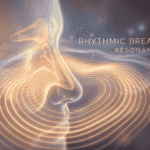
Nasal Nitric Oxide Production During Humming
Studies of respiration have shown that:
Humming increases nasal nitric oxide levels 10-20 fold
Vocalized exhalation oscillates the sinus cavity
The M-phase of OM (the humming phase) stimulates the production of NO in the sinuses much more than the A- and U-phases
Nitric oxide generated in the sinuses is inhaled into the lungs, where it becomes available to the body in circulation.
The effects of humming are mechanically and physiologically based — not symbolically.
Vagus Nerve Stimulation and Autonomic Balance in OM Meditation
OM chanting incorporates many elements that are known to affect autonomic regulation:
Long, slow exhalations
Rhythmical breathing
Vocal vibrations
Focused attention
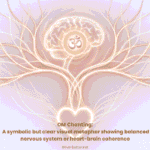
Each of these stimuli activate the vagus nerve, which controls:
Heart Rate Variability and Vagal Tone in Chanting Practices
Heart Rate Variability (HRV)
Stress Response
Emotional Regulation
Release of endothelial nitric oxide
Studies using HRV as a measure of vagal stimulation and slow vocal breathing have found:
Increased vagal tone
Reduced sympathetic arousal
Increased coherence between breathing and heart rhythms
What OM Chanting Research Does Not Claim
It is essential to clarify what scientific research does not assert.
Research does not claim that:
OM chanting uniquely produces nitric oxide
OM is the only method to modulate the described pathways
OM guarantees the same neurological or biochemical outcomes
Ancient practitioners of OM understood modern biochemistry
Rather, what research does show is that OM chanting creates a specific environment in the body — regulated breathing, resonance, and attention — that allows the body’s inherent regulatory mechanisms to operate more effectively.
Experience Always Comes Before Measurement
Measurements provide information on patterns.
Experience fosters development.
The peacefulness, clarity and internal stability that people report while OM chanting arises from the combination of breath, sound, attention and silence. This cannot be reduced entirely to numerical measurements.
Therefore, OM has always been practiced before being explained — if ever explained.
A Balanced Viewpoint
You could say:
OM does not force change onto the body.
It establishes the conditions in which the body’s own intelligence functions more effectively.
This perspective fits well between tradition and science. For additional practices that support stillness and mental balance, see our mental wellness and meditation techniques.
Conclusion
Modern science does not supplant ancient tradition.
Tradition does not need scientific validation to exist.
What modern science provides is a vocabulary — measured and careful — to describe observable physiological correlates, but not diminish the subjective experience of OM.
OM remains what it has always been:
A sound,
A breath,
A pause,
And An Invitation To Silence.
Optional Related Practice
Here is a short OM practice that you can use for quiet listening and reflection:
If you’d like support integrating these practices into daily life, connect with us for personalized guidance.
FAQs:
Does OM chanting increase nitric oxide?
Research on humming and nasal resonance suggests it can increase nasal nitric oxide availability. OM chanting includes a humming component that may support this effect indirectly.
What do EEG studies show during OM chanting?
EEG studies of OM chanting and meditation often show increased alpha and theta activity associated with relaxed alertness and inward attention.
What do fMRI studies suggest about OM chanting?
Some neuroimaging studies suggest OM chanting may reduce limbic reactivity and modulate brain networks linked to calm attentional states.
Is OM chanting a medical treatment?
No. OM chanting is a contemplative practice and should not be considered a substitute for medical care.